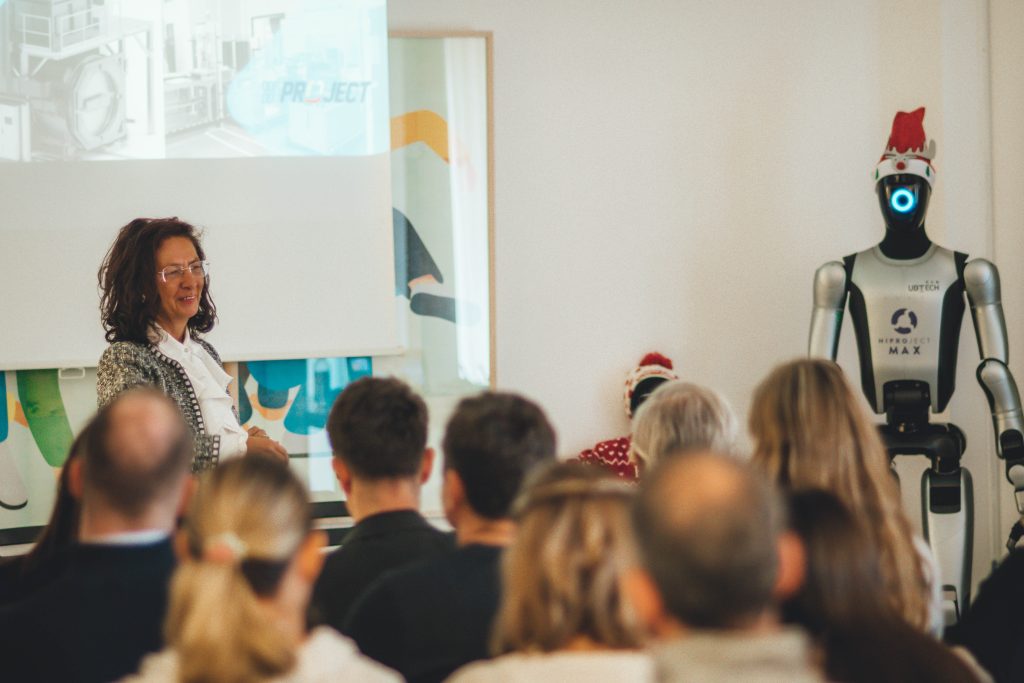
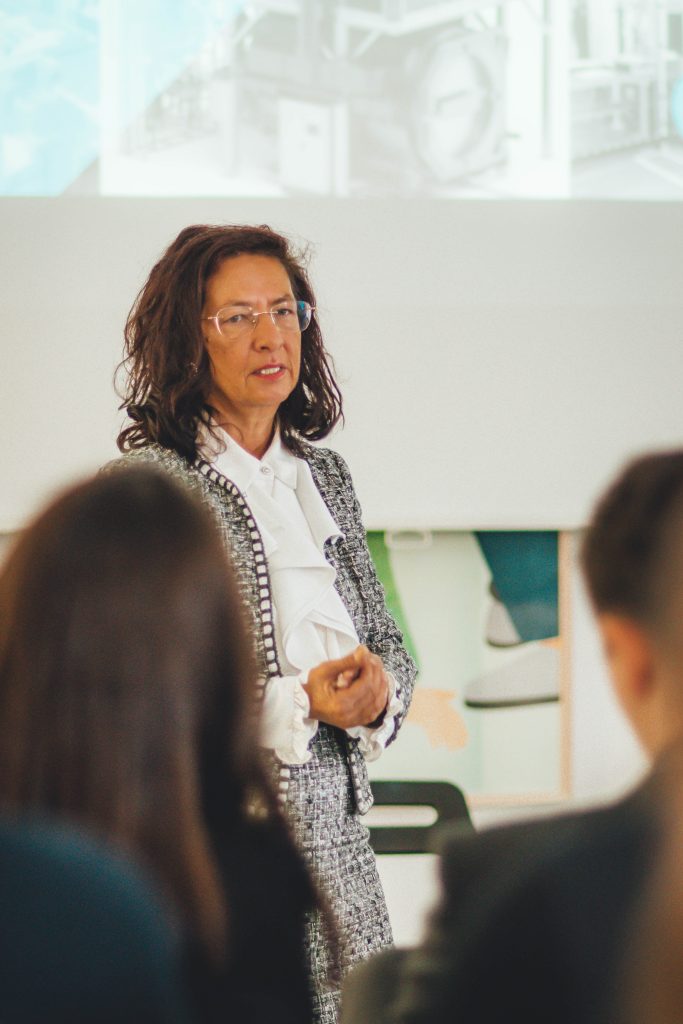
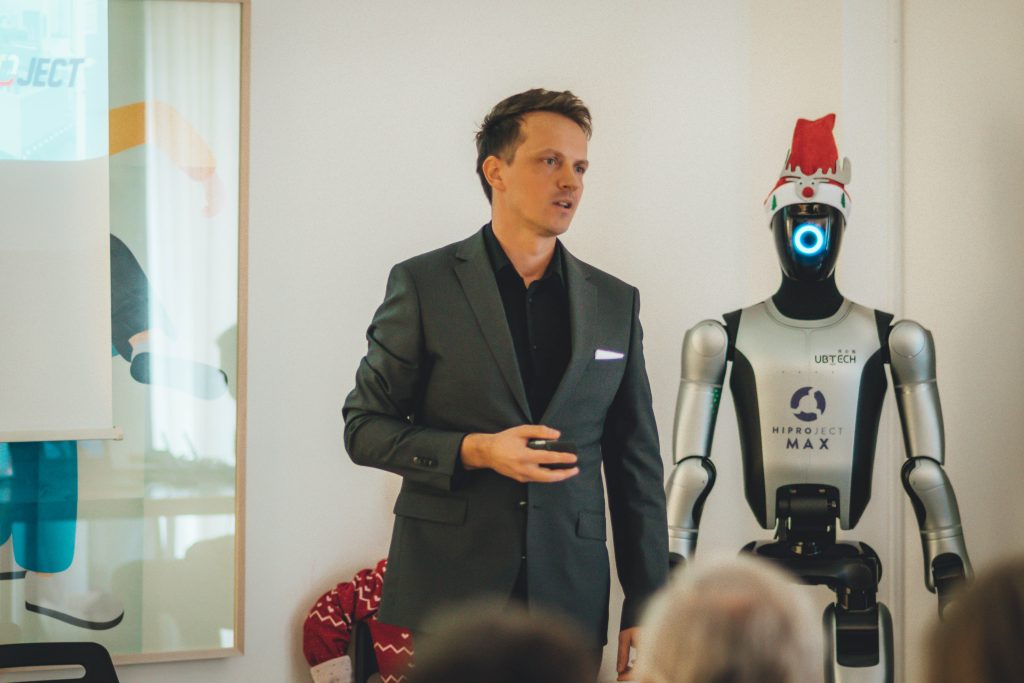
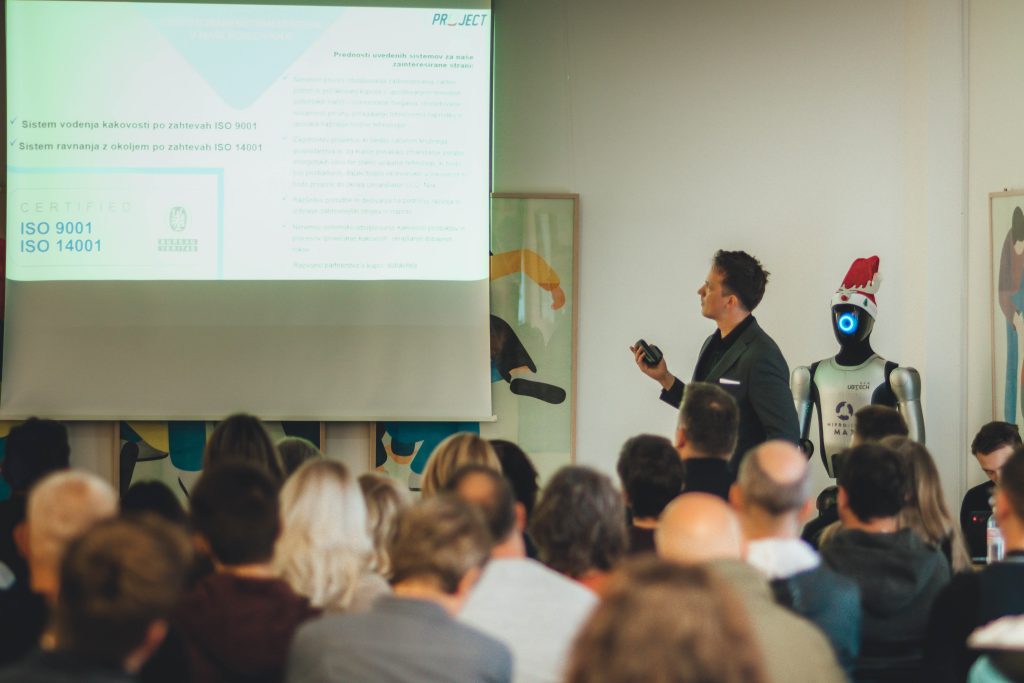
Panel Discussion: Humanoid Robots, Human Collaboration, and the Knowledge of Tomorrow
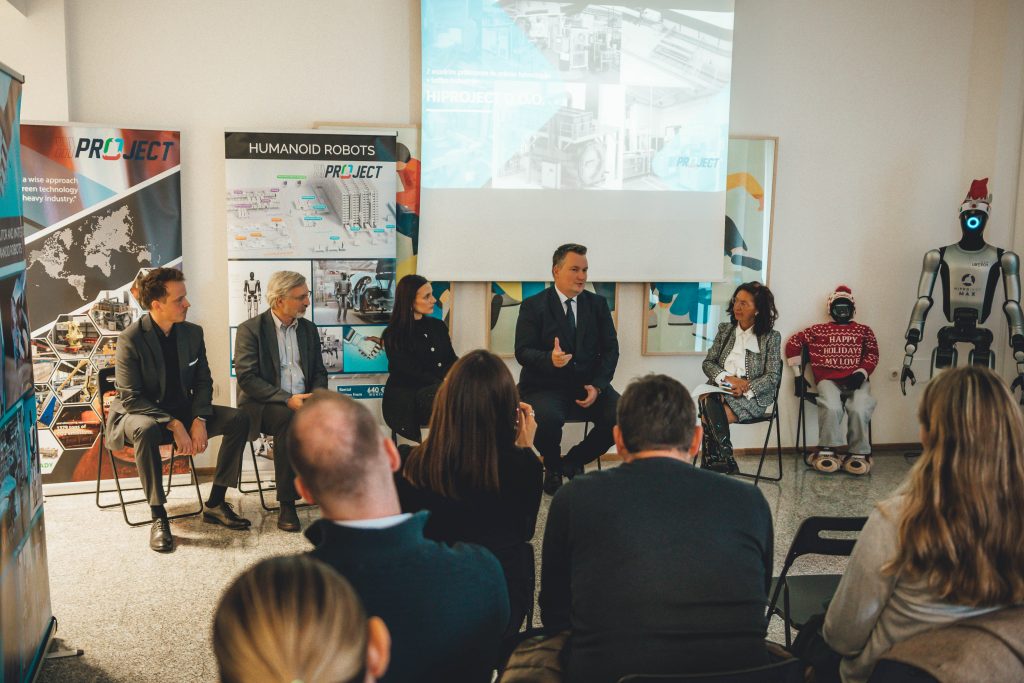
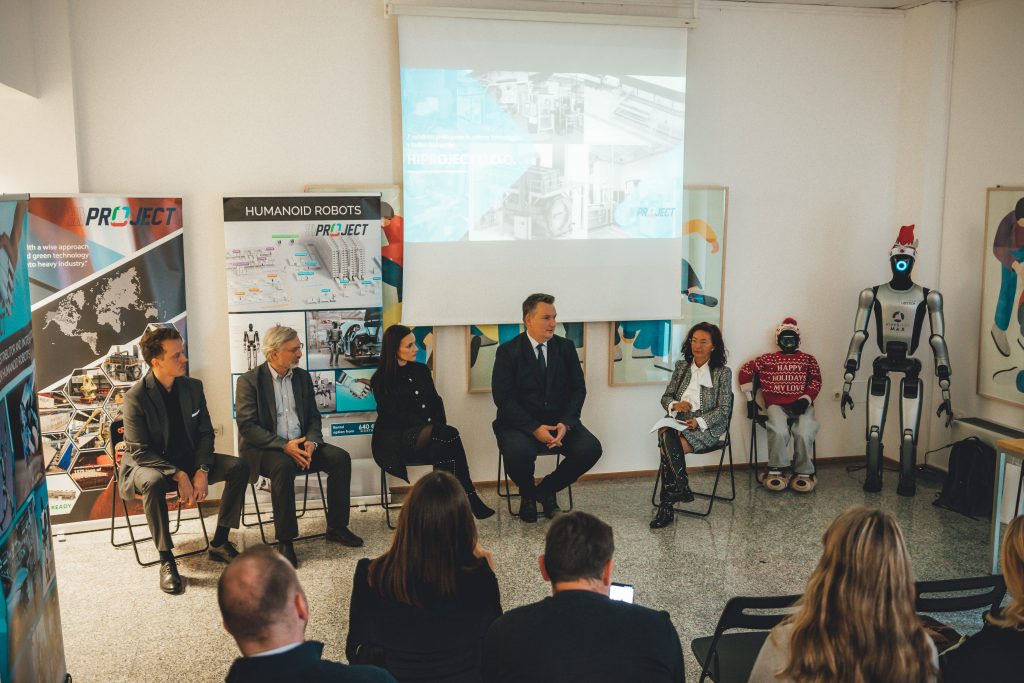
The panel discussion was moderated by Nena Dokuzov.
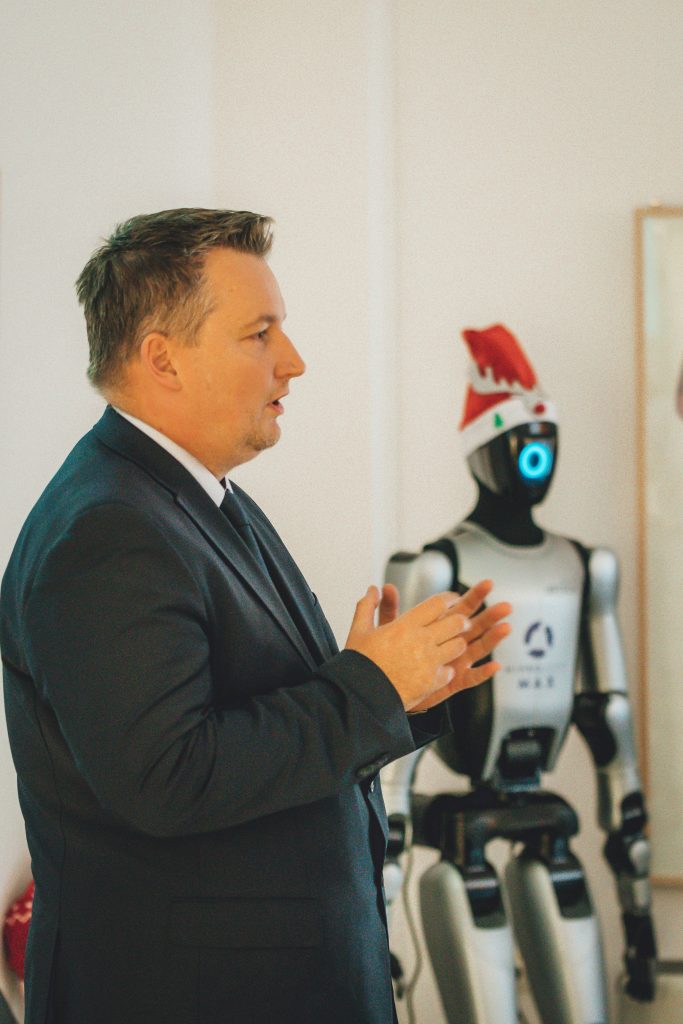
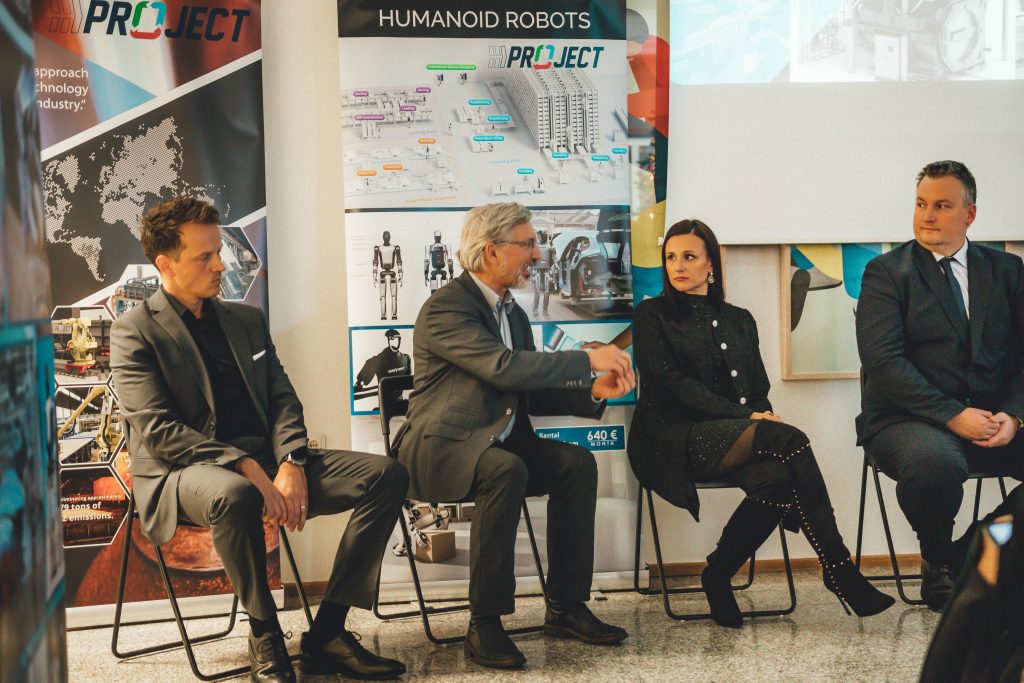
Dr. Igor Kovač from the Jožef Stefan Institute explained the fundamental logic of humanoid robotics:
“Humanoid robots have a human shape because the world is designed for humans — tools, handles, workspaces. We don’t adapt the environment to the robot; we adapt the robot to the existing environment.”
He also highlighted Slovenia’s exceptional starting point in the field of robotics:
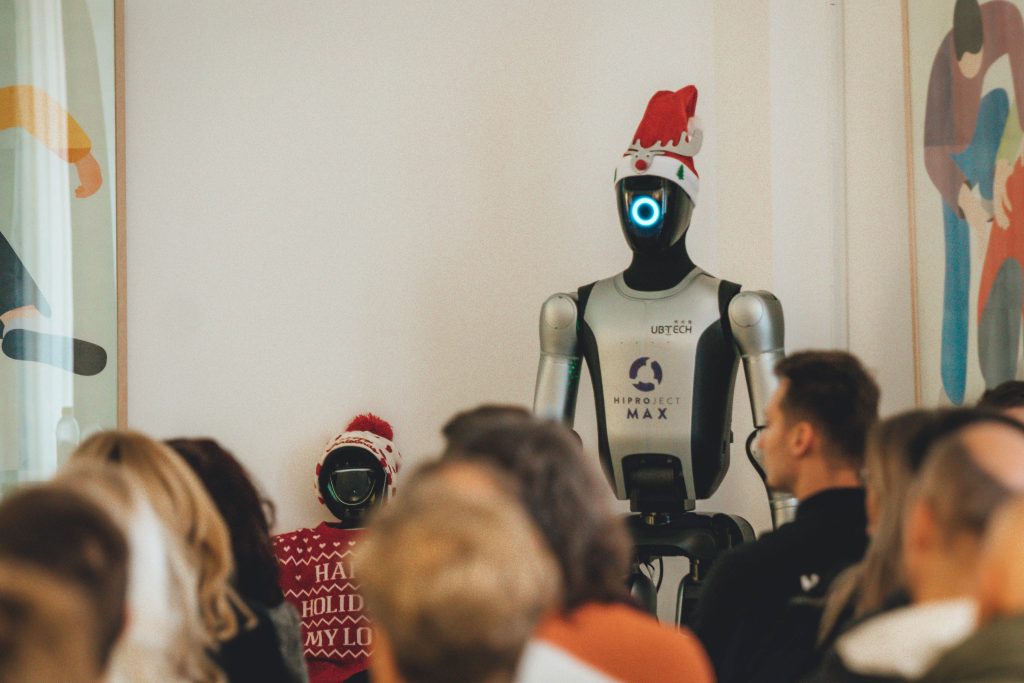
“In terms of the number of industrial robots per 10,000 employees, we are third in Europe and seventh in the world. We have the knowledge, the education system, and top-notch research. With the most advanced humanoid robot in Europe, we have an excellent opportunity to start developing humanoid robotics right here at home.”
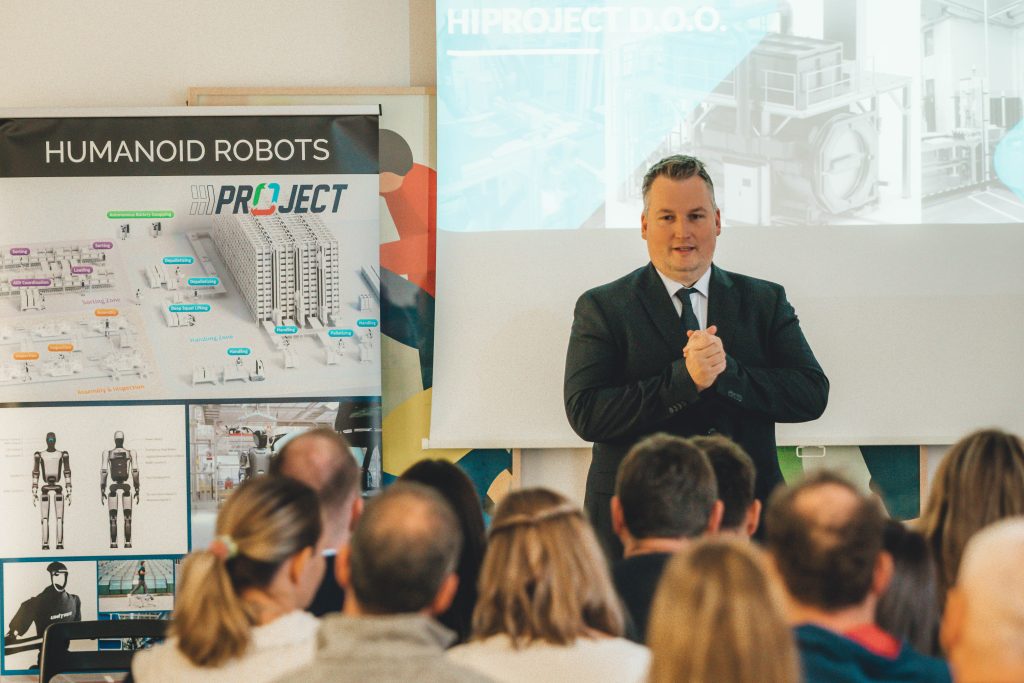
Urban Pevnik, Director of Hiproject, placed the discussion in the broader context of Industry 5.0 and the role of humans in the future of industry. He emphasized that the goal of introducing humanoid robots is not to replace humans, but to transform jobs:
“There is no such thing as a bad employee. What exists is a poor system or management that cannot find the right role for a person. Our goal is for technology to take over the most difficult, dangerous, and repetitive tasks, allowing humans to work more safely, creatively, and sustainably in the long term.”
He added that industry must have the courage to think proactively about the future of skills and professions: young people need to be exposed to the technologies of tomorrow before they enter the labor market.
Bojan Goluh, Head of Sales at Hiproject, emphasized the practical aspect of introducing humanoid robots into industry and clearly defined the company’s role:
Hiproject is not a traditional distributor, but an integrator. For each client, we first determine what they truly need. Then we provide guidance, select the appropriate robot — collaborating with multiple manufacturers — carry out software and system integration, testing, and ensure service and long-term maintenance. The robot alone is not the solution.”
Currently, humanoid robots are mainly involved in simpler tasks such as sorting, loading, moving, and logistics, but over time they will take on increasingly complex duties. He particularly emphasized the importance of safety and employee trust, as without these, the technology cannot be effectively implemented in practice.
An important part of the discussion was also the vision for future infrastructure. Hiproject plans to establish a robotics center in the renovated former Konus building, which will combine:
-
a research center for humanoid robotics integration,
-
an exhibition and demonstration space,
-
an educational section for youth, professionals, and industry.
The human and social dimension of technology was brought into the discussion by Tjaša Šašić Marciuš from Pro Bit:
“Robots cannot replace humans. They will never provide social support, empathy, or human interaction. However, they can take over everything else — routine, repetitive tasks, and burdens — thereby relieving professionals so they have more time, less stress, and can perform their work better.”
The panel was concluded by moderator Nena Dokuzov, who shared a clear vision for the future:
“I hope that we will be the first in Europe to develop a humanoid robot ourselves. We have the knowledge and skills. And I hope that our schools will also be the first in Europe to develop enough talent so that young people can immediately engage in practical work.”
The panel discussion demonstrated that humanoid robots are not just a technological challenge, but a strategic opportunity for Slovenia — provided they are developed through collaboration between industry, science, and education, with a clear focus on humans.
What Awaits Us?
The event showed that humanoid robots, artificial intelligence, and Industry 5.0 are no longer a question of “if,” but “how.” How will we integrate them into society, how will we teach people to understand them, and how will we equip young people with the skills they will need in a world where technology does not replace humans — but rather allows them to be truly human again.
And this conversation has only just begun in Slovenske Konjice.